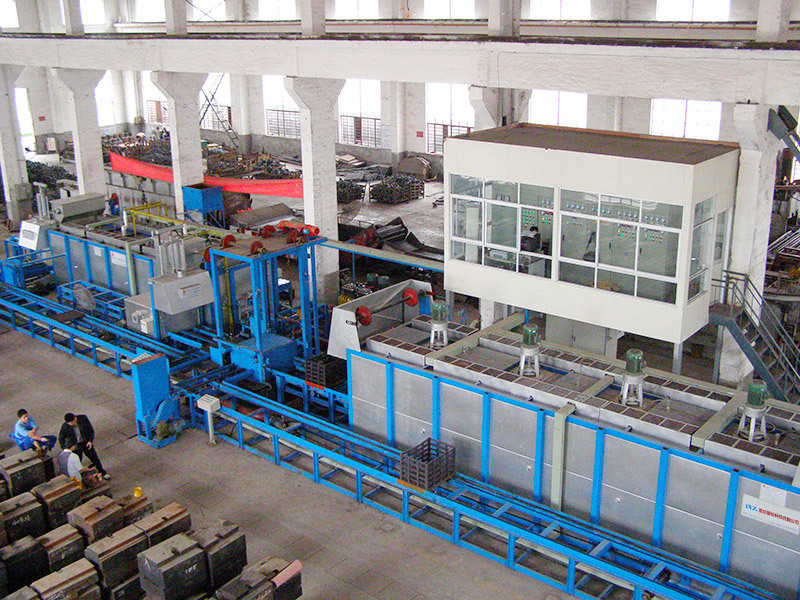
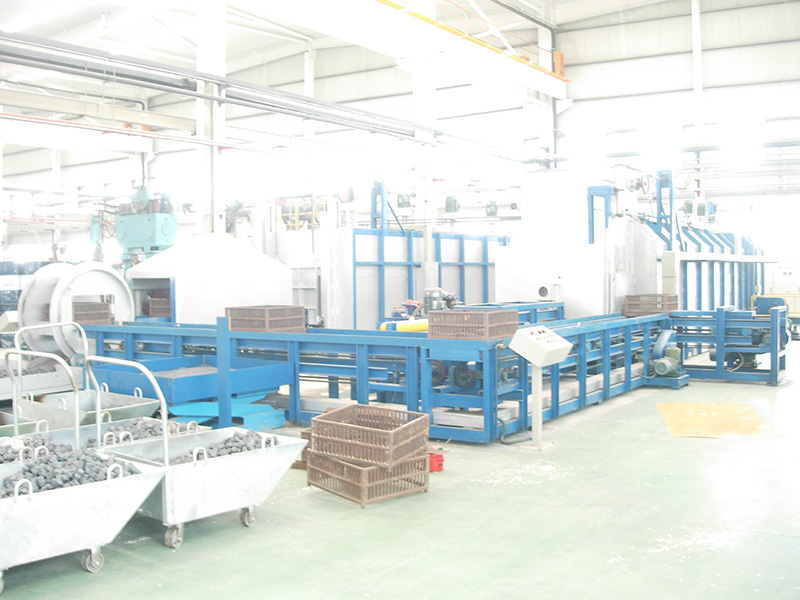
Applications: Widely used in scientific research and small-batch production at enterprises and institutions, as well as in research and teaching at universities and colleges, covering fields such as ceramics, metallurgy, electronics, glass, chemical engineering, mechanical engineering, refractory materials, new material development, special materials, and building materials.
Usage: Widely used in scientific research and small-batch production at enterprises and institutions, as well as in scientific research and teaching at universities and colleges, covering fields such as ceramics, metallurgy, electronics, glass, chemical engineering, mechanical engineering, refractory materials, new material development, special materials, and building materials.
Features:
The electric furnace features a user-friendly design that is both aesthetically pleasing and elegant, with simple operation. The outer paint layer is applied using a high-temperature baking process with powder coating. It boasts excellent resistance to high temperatures, oxidation, and acids and alkalis. The color options are fade-resistant shades that won’t lose their luster even after prolonged use.
The electric furnace shell features a double-layer forced-air cooling design, ensuring that the outer surface temperature of the furnace remains close to room temperature even when the furnace is operating at its highest temperature, thereby preventing accidental injuries.
It employs an internationally advanced temperature controller featuring 30-50 programmable PID self-tuning functions, automatic heating, and automatic cooling—no need for constant supervision.
The electric furnace employs an integrated circuit, modular control, and dual-loop protection (including functions such as over-temperature protection, over-temperature alarm, thermocouple failure protection, overcurrent protection, and overpressure protection), ensuring stable, reliable, and safe operation.
Made from advanced, lightweight alumina ceramic fiber developed domestically, this material boasts excellent thermal insulation performance, is lightweight yet highly resistant to high temperatures, withstands rapid temperature changes without cracking, crystallizing, or shedding particles—eliminating any risk of contamination in the fired products. Its energy-saving efficiency reaches 60% to 80% of that of conventional electric furnaces.
Configurable remote monitoring function;
Specifications and Technical Parameters of the Test Box-Type Resistance Furnace
1. Medium-temperature box-type resistance furnace (with resistance wires as the heating element)
Model
Effective area size mm
Power kW
Maximum temperature ℃
Furnace temperature uniformity ℃
Voltage V
Number of phases
SX2-2.5-10
200×120×80
2.5
1000
±5
220
1P
SX2-4-10
300×200×120
4
1000
±5
220
1P
SX2-8-10
400×250×160
8
1000
±5
380
3P
SX2-12-10
500×300×200
12
1000
±5
380
3P
2. High-temperature test chamber-type resistance furnace (with resistance wires as the heating element)
Model
Effective area size mm
Power kW
Maximum temperature ℃
Furnace temperature uniformity ℃
Voltage V
Number of phases
SX2-2.5-12
200×120×80
2.5
1200
±5
220
1P
SX2-5-12
300×200×120
5
1200
±5
220
1P
SX2-10-12
400×250×160
10
1200
±5
380
3P
SX2-12-12
500×300×200
12
1200
±5
380
3P
3. High-temperature test chamber-type resistance furnace (with silicon-carbon rods as the heating element)